
.png)
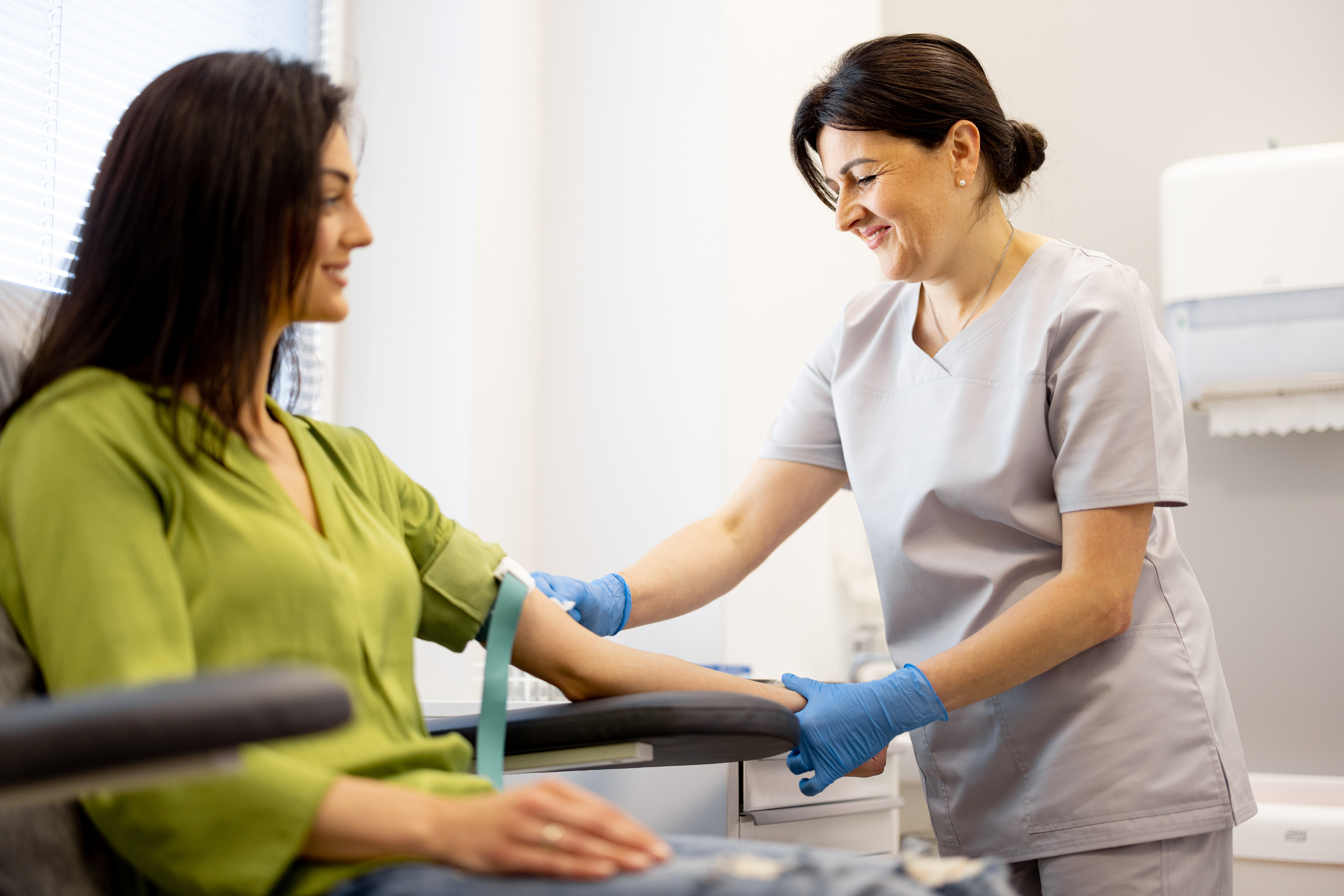
I've been an OB/GYN for more than three decades. In that time, I've watched the same story play out for women across this country: a pap smear, a few questions checked off a screen, some labs and screenings ordered, and a visit that ends before she's said what she actually came in to ask. That's the annual well-woman visit — the one appointment most women get for their health, once a year. This isn’t a failure of any one doctor, but the design of our healthcare system that pressures providers to see ever more patients in limited time.
A visit built for screenings, not for people
The well-woman visit exists because of real, hard-won research: the evidence for primary prevention with screenings for cervical, breast, and colon cancer is powerful. But somewhere along the way, the visit built around that evidence became the entire visit. Data going back to the mid-2000s shows that most preventive visits to OB/GYNs center almost entirely on cervical and breast cancer screening — full stop. Everything else a woman brings with her gets pushed to the side, or to a different appointment, or to a different specialist entirely.
Add to that the clock. The average primary care visit in this country runs about eighteen minutes, based on an analysis of more than 21 million visits. One estimate found that a primary care physician would need 27 hours in a single day to deliver every guideline-recommended screening, chronic disease check, and acute concern a typical patient panel needs. Eighteen minutes was never going to cover a woman's hormones, her sleep, her mood, her family history, and a new symptom she's been sitting on for six months. It's barely enough time for the breast and pelvic exam alone.
So women leave frustrated, told to book another appointment just to talk about their symptoms.
Women have been telling us this for a long time
I've heard versions of that message from my own patients for thirty years. It's not that clinicians don't care. It's that an eighteen-minute slot leaves no room to investigate the thing that doesn't fit neatly into the visit's checklist—so it gets normalized or deferred instead of properly investigated.
Perimenopause shows the gap most clearly
If you want to see exactly where this system breaks down, look at perimenopause. Only 42% of clinicians even bring it up with patients, and just 15% of women feel adequately informed when their symptoms start. Nearly 40% of women seeking care for perimenopause report feeling misdiagnosed. This isn't because the science doesn't exist; it's because most OB/GYN residency programs still don't teach it. Only about 30% of programs include dedicated menopause instruction, and in one study, two-thirds of residents got a basic menopause treatment question wrong.
I had already been delivering evidence-based menopause care when hormone therapy research and treatment for women suffering through perimenopause and menopause were set back for a generation. I've watched my own field play catch-up ever since, and I've watched patients pay the price for that gap in real time — sent to a psychiatrist for mood changes, a sleep specialist for insomnia, a cardiologist for palpitations, when a single connected conversation would have caught the common thread in minutes.
So women go looking for answers on their own
When the visit doesn't leave room for the real conversation, women don't stop asking their questions — they just stop asking their doctor. In a survey of 595 women we fielded this spring, 62% said they turn to Google for health questions their provider didn't answer, and 21% said they've turned to ChatGPT or another AI tool — ahead of Reddit, ahead of no-visit platforms, second only to asking friends and family. That tracks with what researchers elsewhere are finding: in one recent UK survey, women dismissed by their doctors were turning to AI tools at nearly identical rates.
Cost makes this worse. In the same survey, 32% of women told us they'd been surprise-billed after raising a concern during what was supposed to be a free annual visit, and one in six said it made them less honest with their provider going forward. Women are being taught, appointment by appointment, to say less.
That is unacceptable. A visit designed to catch problems early shouldn't discourage women from asking questions and seeking answers about things that matter most to them.
What women are actually walking in with
Our own research backs this up. Of the 595 women we surveyed, more than half said stress, anxiety, or mood is something they deal with regularly — ahead of low energy and fatigue (36%), sleep issues (35%), and weight or metabolic changes (34%). More than a quarter are managing perimenopause or menopause symptoms right now. None of that lives on a standard well-woman checklist.
Forty percent of women told us they see a provider, any provider, for anything, only once or twice a year. For a lot of women, this appointment isn't a supplement to their care. It's the only touchpoint they get.
So we asked what women most wanted to walk away with. Peace of mind topped the list, at 56%. A provider who actually listens came in second, at 41%. And right behind those: 34% said labs they understand and can act on — ahead of routine cancer screenings. Reassurance and being heard matter most, but women want something concrete to walk away with, too: a genuine conversation with real, concrete answers.
They're specific about what that looks like. Twenty-two percent of women told us they've wanted a lab test their provider wouldn't order (hormone panels, thyroid, vitamin D, metabolic and insulin markers, advanced cholesterol testing). Another 12% didn't even know what was available to ask for. Women are naming what they believe a comprehensive care model should offer, and asking for it by name. The system just isn't delivering it.
What we built instead
This is why we designed the Complete Women's Health Visit around a different premise entirely: give women the time and the scope to be viewed as whole people, not as a checklist.
- Up to 45 minutes with a provider — enough time to talk through symptoms, history, and goals, not just run through a screening script.
- A connected review across the areas that actually shape a woman's health — the traditional preventive screenings, plus a real look at hormonal, metabolic, cardiovascular, reproductive, sexual, and emotional health, evaluated together instead of in separate silos.
- Labs matched to the patient in front of us, not a default panel — comprehensive thyroid testing, a cardiometabolic panel, lipids, ferritin, vitamin levels, baseline insulin, and other diagnostics chosen based on her actual symptoms and risk factors.
The results tell me we're on the right track. Among women who attended a Complete Women's Health Visit, 87% said all or most of their concerns were addressed, and 9 in 10 said they'd return to Visana for future care. Our value-based model has shown average savings of $3,429 per patient within six months, because catching a metabolic or cardiovascular issue early is both better medicine and better economics than catching it in an emergency room five years later.
The visit should work for the woman in the room
I didn't get into this field to hand out screening reminders. I got into it to help women stay well, and to catch what's wrong before it becomes an emergency. The well-woman visit, as it's practiced today, wasn't giving me — or my patients — enough room to do that. So we rebuilt it.
If your last annual visit left you with more questions than you walked in with, that's not a personal failing, and it's not something you have to live with. It's a sign the visit itself needs to change. That's exactly what the Complete Women's Health Visit is for.
Learn more about the Complete Women's Health Visit →
Quick answers
- What's wrong with the standard annual well-woman visit? It has devolved into a narrow set of screenings — mainly cervical and breast cancer checks — inside an average visit of under 20 minutes. That leaves little to no time for symptoms, hormonal changes, or broader health concerns.
- What does the Complete Women's Health Visit include? Up to 45 minutes with a provider, a connected review of hormonal, metabolic, cardiovascular, reproductive, sexual, and emotional health alongside standard preventive screenings, and labs personalized to each patient's symptoms and risk factors.
- How is it different from a regular annual exam? A regular annual exam typically covers preventive screenings only. The Complete Women's Health Visit combines that preventive care with real symptom evaluation and specialist-level expertise across gynecology, primary care, and endocrinology — in one visit.
- Who is this for? Any woman who has left an annual visit with unanswered questions, especially those navigating perimenopause, menopause, metabolic changes, or symptoms that don't fit neatly into a single specialty.





.png)


%20(800%20x%20600%20px)%20(700%20x%20550%20px)%20(2).png)